.png)
When Mother Nature Spoke at a Psychedelic Conference
Updated: 2 hours ago

The World Ayahuasca Forum, which took place in Spain in September, was historic in several ways. For the first time, the psychedelic studies field witnessed an event led and protagonized by Indigenous leaders from diverse ethnicities. This is not merely a logistical detail: it symbolically represents the rightful place of Indigenous peoples in debates and research on the therapeutic uses of their ancestral medicines.
For the first time at psychedelic conferences, a speaking slot was not simply “given” to a quota of Indigenous representatives. The center of the conversation was theirs. And they were able to show, with generosity and openness, how to create space for dialogue and confluence with the perspectives, research, and viewpoints of academic science.
Indigenous women leaders and activists, such as Putanny Yawanawa, Adana Omágua Kambeba, Daiara Tukano, Edina Shanenawa and Vari Puyanawa, were present and delivered very firmly positioned messages. They talked about the realities of Indigenous peoples, their sovereignty, and their rightful place in relation to ancestral technologies such as Ayahuasca, as well as all the pressure, violence, and appropriation that have been affecting them.
The message was clear: the threats to the safety, freedom, and well-being of Indigenous peoples and their biomes arise not only as a capitalist consequence of the psychedelic renaissance, but also from the lack of guarantees of basic political rights for this population and for the environment.
There is no medicine without standing forests, clean water, and guaranteed rights. To speak of plant medicines and biocultures is also to speak about environmental preservation, public safety, and the political rights of Indigenous peoples and their cultures.
Influential women from the psychedelic field were also present, such as Sutton King, Atira Tan, Coltrane Lord, Jacqueline Rodrigues and Monica Gagliano. Although they are still fewer in number compared to male scientists and activists, they were able to show the power of their work and share their perspectives on how we can inhabit spaces of therapeutic use of biocultures with ethics, decoloniality, and reciprocity with Indigenous peoples and their cultures.
Each of them brought words that point toward possible pathways for renewing the current paradigms operating within the psychedelic field, with care, epistemic humility, and reverence for all those who came before.

I had the honor of actively contributing to the Forum movement as a volunteer, as a moderator of one of the discussion panels, and also as a speaker. I brought the topic “Neutrality or silencing? Contemporary mental health, scientific epistemicide, and biocultures” to share my reflections as a psychotherapist, psychedelic practitioner, and learner of ancestral sciences.
The way we understand what “health,” “healing,” and “mental illness” are is still strongly connected to concepts and theories created by a predominantly male, white, and European niche. People are not neutral, therefore their theories aren’t as well: they reflect ways of being in the world that fit within their own frameworks of what is considered normal and abnormal.
This debate is extremely important when we talk about plant medicines and biocultures.
How do we support someone who comes into contact with ancestral cultures and medicines through Western perspectives and methodologies? This was one of the questions I brought forward for reflection and expansion during my talk.
Learning how to hold space with cultural respect and epistemic humility, as well as unlearning certain concepts of “normality” shaped by colonization, are some of the essential points I suggested we consider as we envision new futures for the therapeutic use of biocultures and the clinical integration of experiences with expanded states of consciousness.
In summary, the Forum was an experience of expanding collective consciousness and also a major call to action for everyone who inhabits the psychedelic field. Is it possible to remain indifferent to the causes of preservation of Indigenous peoples and the environment while administering their ancestral medicines in laboratories, luxury retreats, and clinics? What do we want to plant for the future of psychedelic healthcare?
How can we, non-Indigenous people interested in biocultures, be allies rather than colonisers in this cause?
These and other questions were left as seeds. It is up to us to help them flourish.
*
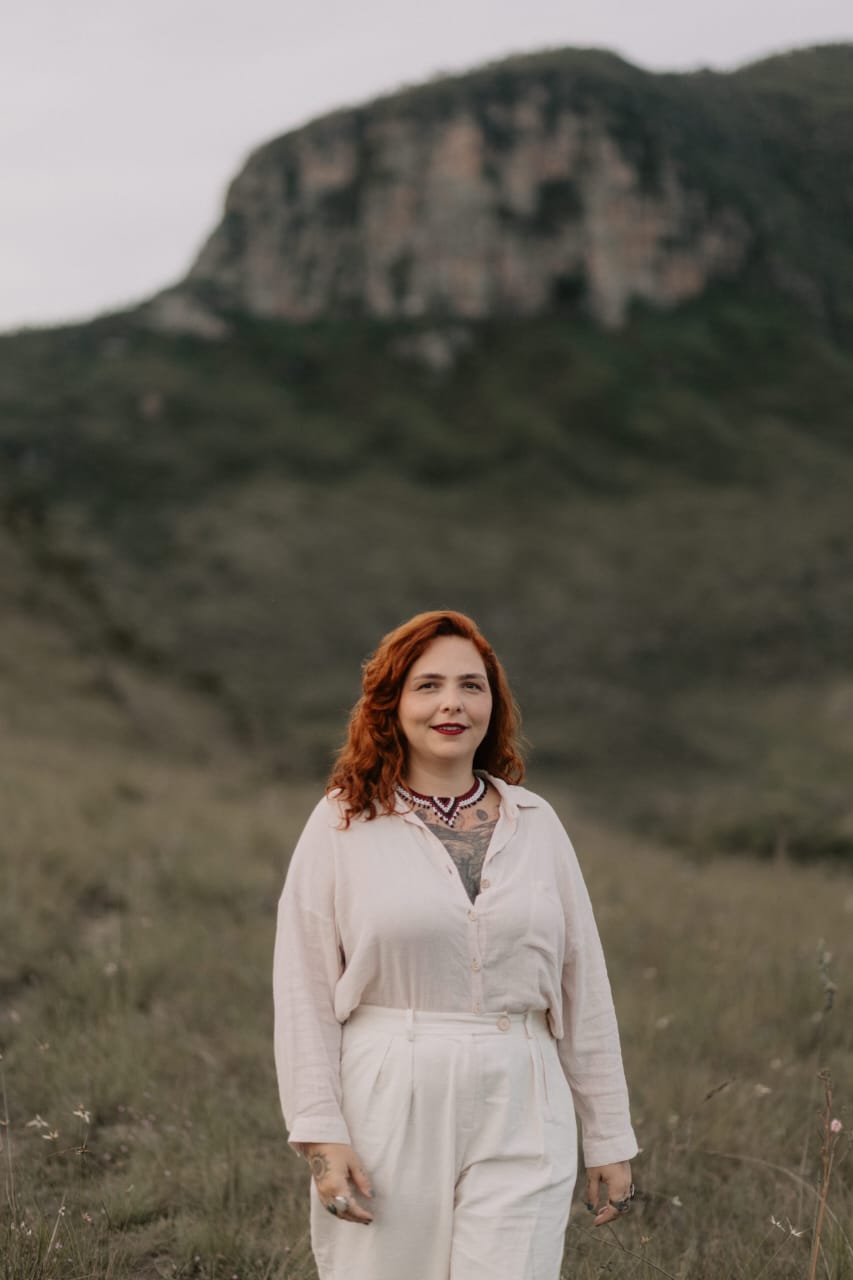
About the author: Tabata Gerk is a psychotherapist and educator in mental health, entheogens, and biocultures. She holds a Bachelor’s and a Master’s degree in Clinical Psychology from the University of Brasília, with a specialization in acute mental health crisis interventions. Certified in Psychedelic Therapy and Integration by Psychedelics Today and trained in psychedelic facilitation through a Trauma-Informed approach by Atira Tan. She is also an apprentice of Brazil’s living ancestral cultures and walks alongside traditional masters and Indigenous knowledge keepers. Furthermore, a learner of the Fungi mysteries and a ceremonialist of the Crossroads.


Comments